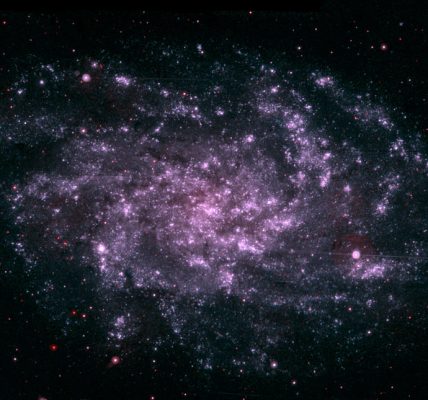

The radio galaxy discovery has unveiled a cosmic phenomenon from 12.5 billion years ago, potentially the most powerful ever identified. This finding could change our perception of the universe’s evolution.
What is a radio galaxy?
A radio galaxy is a type of galaxy that emits strong radio waves, typically powered by supermassive black holes at their centers. These galaxies are among the most luminous objects in the universe, often outshining their visible light emissions. The energy produced in a radio galaxy is primarily due to the accretion of matter onto the black hole, which generates immense jets of particles that travel at nearly the speed of light.
The discovery of a radio galaxy from 12.5 billion years ago has sparked significant interest in the astronomical community. This finding is especially remarkable as it may be one of the most powerful radio galaxies ever identified. Researchers believe that studying such ancient galaxies can provide crucial insights into the early universe and the formation of cosmic structures.
Key characteristics of radio galaxies include:
- Active Galactic Nuclei (AGN): The black hole at the center is surrounded by an accretion disk, where matter heats up and emits energy across various wavelengths.
- Radio Lobes: These are large structures formed by the jets of particles ejected from the black hole, which can extend far beyond the galaxy itself.
- Emission Spectra: Radio galaxies typically exhibit unique emission patterns that help astronomers identify their characteristics and distances.
The recent radio galaxy discovery ensures that our understanding of these powerful cosmic entities continues to evolve, offering a glimpse into the universe’s distant past.
The significance of the discovery
The recent radio galaxy discovery has profound implications for our understanding of the universe. This remarkable finding, which dates back 12.5 billion years, sheds light on the formation and evolution of galaxies in the early universe. By examining such ancient cosmic entities, astronomers can glean insights into the conditions that prevailed shortly after the Big Bang.
One of the most significant aspects of this discovery is its potential to reshape existing theories regarding galaxy formation. Previously, it was believed that massive galaxies formed much later in cosmic history. However, this radio galaxy challenges that notion, suggesting that powerful galaxies could have emerged much earlier than previously thought.
Moreover, the immense energy output of this radio galaxy indicates that it was actively feeding on surrounding materials, which raises questions about the processes that enabled such rapid growth in the early universe. The study of this galaxy could also enhance our understanding of supermassive black holes and their role in galaxy evolution.
In addition, the radio galaxy discovery emphasizes the importance of advanced observational techniques in astronomy. As telescopes and technology continue to improve, researchers are likely to uncover even more ancient galaxies, leading to a deeper comprehension of the universe’s history and its underlying mechanisms.
Overall, the implications of this finding extend far beyond the discovery itself, opening new avenues for exploration in cosmology.
How was the galaxy discovered?
The radio galaxy discovery, which dates back 12.5 billion years, was made using advanced observational techniques that harnessed the power of both ground-based and space telescopes. Astronomers utilized the Atacama Large Millimeter/submillimeter Array (ALMA) and the Very Large Array (VLA) to capture detailed images and data of the distant universe.
Key steps in the discovery process included:
- Initial Observations: Researchers began by identifying a region of space rich in cosmic activity, which suggested the presence of a powerful radio galaxy.
- Data Collection: Using ALMA, scientists gathered data on the galaxy’s emissions, focusing on its radio waves, which are crucial for understanding its properties and behavior.
- Analysis: The data collected was analyzed to determine the characteristics of the galaxy, including its size, luminosity, and distance from Earth.
- Verification: Follow-up observations were conducted with the VLA to confirm findings and ensure the accuracy of the measurements.
This meticulous process not only confirmed the existence of the radio galaxy but also revealed its remarkable power, making it potentially one of the most potent ever discovered. By studying such ancient cosmic objects, astronomers hope to gain insights into the early universe and the formation of galaxies.
Implications for astrophysics
The recent radio galaxy discovery has profound implications for our understanding of astrophysics. As scientists delve deeper into the characteristics and behaviors of this extraordinary galaxy, several key insights emerge.
- Understanding Cosmic Evolution: This discovery enhances our knowledge of how galaxies have evolved over billions of years. It provides a glimpse into the conditions of the universe shortly after the Big Bang, challenging existing theories about galaxy formation.
- Dark Matter and Energy: The findings could shed light on the nature of dark matter and dark energy. By studying the radio emissions and their interactions, astrophysicists can gain insights into the unseen components that make up the universe.
- Galaxy Formation Models: The characteristics of this ancient radio galaxy may influence existing models of galaxy formation and growth. It raises questions about the role of supermassive black holes in the early universe and their impact on star formation.
- Technological Advancements: This discovery also highlights the importance of technological advancements in astrophysics. The methods used to detect and analyze such distant galaxies will pave the way for future discoveries.
In summary, the radio galaxy discovery not only enhances our comprehension of the universe’s history but also prompts a reevaluation of established theories and encourages innovative research in the field of astrophysics.
Comparing ancient and modern galaxies
Comparing ancient and modern galaxies reveals significant insights into the evolution of the universe. Recent findings related to the radio galaxy discovery have sparked interest among astrophysicists, particularly due to the enormous age of the galaxy being studied—12.5 billion years. This timeframe places it in the early stages of the universe, providing a unique glimpse into the formation and development of galaxies.
Ancient radio galaxies are believed to have been much more powerful than many of their modern counterparts. This is evident when examining key characteristics:
- Size: Ancient radio galaxies often exhibit vast structures, far larger than typical galaxies observed today.
- Activity: High levels of energetic output indicate that these galaxies were in a period of rapid growth, fueled by immense black holes at their centers.
- Star Formation: Evidence suggests that ancient galaxies experienced bursts of star formation, which may have contributed to their rapid evolution and size.
- Environmental Influence: The interactions with surrounding matter and cosmic radiation in the early universe may have shaped their development in ways that are less common today.
By juxtaposing these ancient radio galaxies with contemporary ones, researchers can better understand the cosmic evolution and the processes that govern galaxy formation across different epochs.
Future research directions
The discovery of the radio galaxy, dating back 12.5 billion years, opens up numerous avenues for future research. Astronomers are particularly interested in understanding the mechanisms that led to the formation and evolution of such powerful galaxies. The following research directions have been proposed:
- Investigating Cosmic Evolution: Future studies will aim to explore how radio galaxies evolve over time and their role in the larger cosmic structure. This includes examining their interactions with surrounding matter and radiation.
- Comparative Analysis: Researchers will compare this ancient radio galaxy with modern counterparts to identify differences and similarities in their formation processes and activity levels.
- Advanced Telescope Technology: The future of radio galaxy discovery relies heavily on advancements in telescope technology. Upcoming missions are expected to enhance our ability to detect and analyze distant galaxies more efficiently.
- Understanding Black Holes: A key area of interest is the relationship between supermassive black holes and their host galaxies. This discovery may provide insights into how black holes influence galaxy formation and behavior.
- Collaboration in Astrophysics: Collaborative efforts among international research teams will be crucial for sharing data and methodologies, enhancing the overall understanding of radio galaxies and their significance in astrophysics.
As researchers delve deeper into these directions, the radio galaxy discovery is likely to reshape our understanding of the universe’s history.
Conclusion on cosmic discoveries
In conclusion, the recent discovery of a radio galaxy dating back 12.5 billion years has provided remarkable insights into the early universe and the formation of cosmic structures. This radio galaxy discovery highlights the evolution of galaxies and their role in the cosmos, offering a glimpse into a time when the universe was still in its infancy.
The significance of this finding cannot be overstated. It challenges our understanding of galaxy formation and evolution, suggesting that powerful radio galaxies may have been more common in the early universe than previously thought. This new perspective encourages scientists to reevaluate existing models of cosmic evolution and the forces that shaped the universe.
Future research is likely to expand on these findings, with astronomers planning to investigate similar ancient galaxies. The potential to uncover more radio galaxies from this era could lead to groundbreaking discoveries, answering lingering questions about dark matter, dark energy, and the forces that govern galaxy formation.
As we continue to explore the depths of the universe, the implications of the radio galaxy discovery will resonate throughout the field of astrophysics. It paves the way for a deeper understanding of our cosmic origins and the mechanisms that have guided the development of galaxies over billions of years.
The recent radio galaxy discovery has provided unprecedented insights into the early universe, revealing the formation and evolution of massive galaxies. This radio galaxy discovery showcases the power of modern telescopes in uncovering the mysteries of cosmic history.
Photo by William Carvalho on Pexels
Where this came from
You might also like